I Despise Co-Branded Credit Cards! Except When…
Co-branded credit cards are usually a trap. They look shiny, but the rewards are often worse than a solid bank card because the same swipe fees get split one more way, and the perks are designed to lock you into one brand. But when the math flips in your favor—when a partnership is mispriced or when hotels can hand you outsized value through unsold rooms, a few co-branded cards can actually be money printers.
Giorgio Sarro
The Rich Grad Student
You can't imagine the sadness I feel when I see someone paying with an Apple card at the grocery store. What are you doing, my friend? Go read RGS!
What are co-branded credit cards?
A co-branded credit card carries the name of a business or brand that is not a financial institution, such as Costco, Marshalls, Bass Pro Shops, Marriott, or American Airlines. These cards typically provide benefits specific to that brand. However, the brand itself does not take on the risk of issuing credit. There is always a bank behind the card, such as Citi for Costco.
Why co-branded cards are a trap:
As we discussed, credit cards make money every time you swipe, sometimes up to 3%, forcing merchants to inflate the price of everything we buy. To keep the system attractive, banks share part of the revenue with you as cash back or rewards.
A co-branded card adds a third participant, the retailer or brand, which also earns a cut and designs perks to steer your spending toward them.
Mathematically, the rewards for the consumer cannot be better than a regular everyday bank card. The same interchange fees are split among three entities instead of two. It’s like saying that X/3 ≥ X/2.
If a co-branded credit card looks enticing, read the fine print. Watch for these common tricks:
- Rewards that can only be used at the brand (e.g. Verizon card*)
- Rewards that expire quickly (e.g. Macy’s card*)
- Tie the “no fee” card (and your credit score) to a paid annual membership (e.g. Amazon* and Costco* cards)
- No sign-up bonus (e.g. Apple card*)
- Low cash back or points compared to equivalent bank cards (e.g., Southwest cards*)
*As of writing
Many people feel like they “won” with a flashy 30% first-purchase discount, then earn little after that. A solid general bank card, like the Amex Blue, often gives a bigger welcome bonus on that first purchase and better cash back on everything that follows.
…Except When You Should Get These Co-Branded Cards
Like with any rule, there are exceptions. The co-branded cards we recommend fall into two groups:
1) The bank-brand deal was miscalculated
If the partnership was miscalculated, either on the side of the bank, or for the business, the consumer might come on top. These mistakes are costly, so the co-branded card will not last long term.
The best example is the Bilt 1.0 card. Wells Fargo, the issuing bank, took heavy losses on the card (1). We highly recommended the card when it came out. Sadly, the magic days of spending $0.04 per month on the card and earning thousands of points in rent are gone. There is still some juice in the new Bilt 2.0 Palladium card if used properly, but it is no longer the gamechanger that Bilt 1.0 once was.
2) Hotel Credit Cards
Hotels have a magic tool to add value for the consumer: unsold rooms.
Let’s run some numbers: If you spend $1000 at Hilton:
- You get 30,000 points from the Hilton Honors American Express Surpass. 30,000 Hilton points are worth around $150 and can get you a free room at most Hilton Garden Inns in the US. If you bought the same $1000 room on the Chase portal using a Chase Freedom Unlimited you would have earned $50 in cash back and 0 Hilton points, Your net value from the Hilton card is about $100!
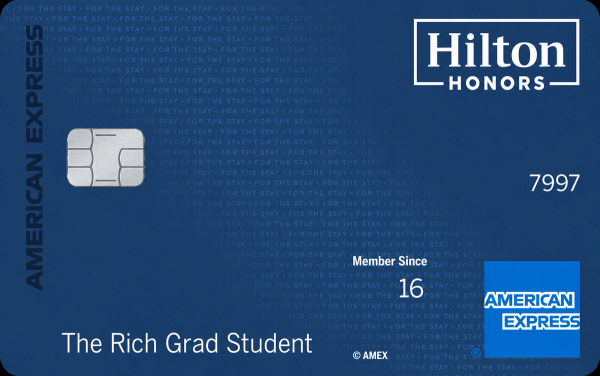
- Amex keeps approximately $15 from an approximately $30 interchange fee on your $1000.
- Hilton gets approximately $15 from Amex and keeps it. The free room you got with the 30k points was unsold. Giving it to you was free to Hilton. The hotel would have incurred the fixed costs regardless of occupancy.
Everyone wins! Free money and rewards—real economic magic!**
At RGS we recommend several hotel cards including the IHG One Rewards Premier, Marriott Bonvoy Business, Hilton Honors American Express Surpass, World of Hyatt, Marriott Bonvoy Brilliant.
Doesn’t the Unsold Room Value Apply for Cash Prices as Well?
Yes, indeed, prices fall when the hotel is not fully booked and rise when near capacity. However, to maintain brand image, and incentivize people to buy rooms as early as possible, hotels will not drop their nightly rate below a certain threshold. This comes at the expense of having empty rooms on certain days.
What About Airlines?
Financially, airlines, like hotels, can give away unsold seats for point redemptions. However, unlike hotels, airlines have greater flexibility in adjusting their seat availability. In other words, you can cancel a flight, but you can’t cancel a hotel room. This makes airline co-branded credit cards neutral, in my opinion. For most graduate students, a general bank travel card is the better play because you earn transferable points and still collect airline miles on tickets booked through the card’s travel portal. Airline cards can make sense for specific cases, such as frequent flyers chasing status or when a very large sign-up bonus is available.
**It may look like Hilton lost $30 to interchange and only earned $15, but room prices are increased to cover payment costs, so the $15 is real profit for Hilton.**
The cash flows are also more complex because Hilton does not own most properties. Typically 10 to 20 percent of the room price flows from the hotel operator to Hilton as fees, and when rewards are redeemed Hilton sends money back to the operator.
Note: Transaction terms between hotels, airlines, and banks are not public. This analysis draws on personal contacts and informed inference. All figures are approximate and can vary by contract.
References
(1) https://www.wsj.com/finance/banking/wells-fargo-credit-card-rent-rewards-8e380852
(2) https://www.wsj.com/finance/banking/wells-fargo-plans-to-exit-a-credit-card-program-that-gave-rewards-for-rent-336dae4b