Everyday Earnings
Now that you've had your first credit card for six months and your credit score is established, it's time to level up. We are ready to venture into the next phase of the credit card game. Getting the following cards will establish a strong baseline to help you maximize point accumulation and later travel for free.
Karan Jakhar
The Rich Grad Student
Now that you've had your first credit card for six months and your credit score is established, it's time to level up. We are ready to venture into the next phase of the credit card game. Getting the following cards will establish a strong baseline to help you learn how to use different card categories, maximize point accumulation and later travel for free.
If you are thinking, I do not know what you are talking about, then visit I am new here. I know my credit cards, skip ahead to our Travel Credit Cards guide or the advanced Credit Card Pro article for luxury perks and bonus hacks. But if you’re just getting started, read on!
What are Everyday Cards?
Everyday cards are starter to mid tier credit cards that most grad students can qualify for once they have about 6+ months of credit history, and they usually have a $0 annual fee and are offered by nearly every major bank. They are the bread and butter of your Rich Grad Student journey because they help you build credit while earning rewards in three main ways:
- Sign up bonuses, where you earn a lump sum of points after meeting a spending requirement in the first 3 to 6 months, often low enough to fit a normal grad student budget and the fastest way to jumpstart rewards.
- Elevated multipliers on everyday spending, which you can later use for travel.
- Possibility of earning points instead of cash back. You generally get far more value by transferring points to airline and hotel partners instead of using them to pay your statement balance, which we explain more in Travel Credit Cards.
RGS tip: we strongly recommend applying for the Chase Freedom Flex or Chase Freedom Unlimited early because of Chase’s application rules(1), then saving your rewards until you later open a Chase Sapphire Preferred to boost their value, and you can see our suggested application order in our Point Millionaire Guide.
Everyday Credit Cards
5% Rotating Bonus Categories: like groceries, gas, dining, or Amazon, that change every three months. Capped at $1500 per quarter. Earn only 1% cash back for all other spendings:
Chase Freedom Flex (0$/year)
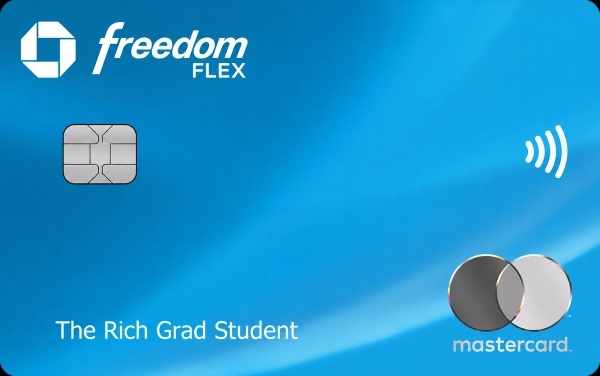
3% On select categories: like dining, pharmacies, grocery stores, or retail purchases:
Amex Blue Cash Everyday (0$/year)

Chase Freedom Unlimited (0$/year)

Citi Strata Card (0$/year)

1.5% cash back: These cards offer a higher cash back on all purchases that do not fit a common category:
Chase Freedom Unlimited (0$/year)
Some smaller issuers also offer 5% cash back capped on uncommon categories, like only "fast foods" or only internet providers. This is generally not worth your time given the small benefits. Remember that you should not open more than 5 cards every 2 years (1). Let's keep those spaces open for more valuable cards.
Does Opening too many Cards Hurt my Credit Score?
Missing payments is what really hurts your credit score (2), so the Rich Grad Student rule is simple: always pay on time and in full.
Opening a new credit card can cause a small, temporary dip because of the credit inquiry and a lower average account age (2), but it usually rebounds within a couple of months if you keep paying on time. Over the long run, adding cards can actually help your score because it increases your total available credit, which can lower your credit utilization as long as your spending stays the same. So don’t panic over small score fluctuations, just be strategic, space out applications, and keep your balances low (2). This is the path to millionaire-style travel on a grad student budget.
The "Rich Grad" Strategy: Optimizing Spending
The mindset here isn't about spending more; it's about spending wisely.
The Conference Reimbursement "Hack": As a grad student, you’ll likely travel for conferences, workshops, or summer schools. Usually, you pay for these expenses upfront (registration, flights, hotels, and meals) and the university reimburses you later. This is a goldmine. You get to keep all the points and miles earned on those high-dollar purchases, essentially getting paid to build your travel fund.
Personal Travel: Many grad students are international students. Flights home are significant expenses. Using the right card for these big-ticket items can earn you enough points for a free domestic flight later in the semester.
References
(1) https://www.myfico.com/credit-education/blog/5-24-rule
(2) https://www.experian.com/blogs/ask-experian/credit-education/score-basics/what-affects-your-credit-scores/